ISOLA DI GORGO – ITALY’S FURTHEST WING
During the earliest stages of the First World War, Grado became home to the base of the 1st Seaplane Squadron (Squadriglia Idrovolanti), the closest to the front line, from where Italian forces were able to counter Austro-Hungarian seaplanes operating from Trieste. Initially, the squadron had only two Macchi L.1 seaplanes assigned to reconnaissance duties. In February 1916, its offensive capability was strengthened through the arrival of French aviators and six FBA seaplanes, together with the construction of a large hangar in Grado.
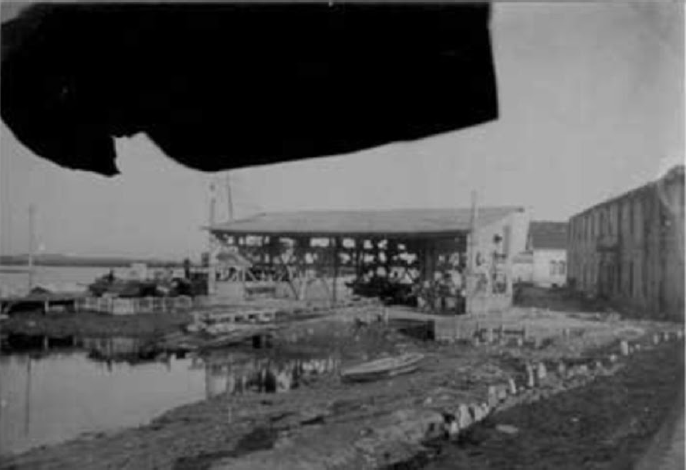
In July 1915, a second seaplane station was established on Isola Gorgo, making use of the stretch of water between the island and the Belvedere–Grado causeway for take-off and landing, while also providing shelter from the Bora wind. On 15 December 1916, the 2nd Royal Army Seaplane Squadron was formed to support operations on the Carso front and the lower Isonzo. In the spring of 1917, when the Royal Navy’s 1st Squadron became the 253rd Squadron equipped with nine Macchi L.3 seaplanes, the Royal Navy Engineering Corps constructed an artificial blind canal on Isola Gorgo, protected from wave action and used as a take-off and landing channel.
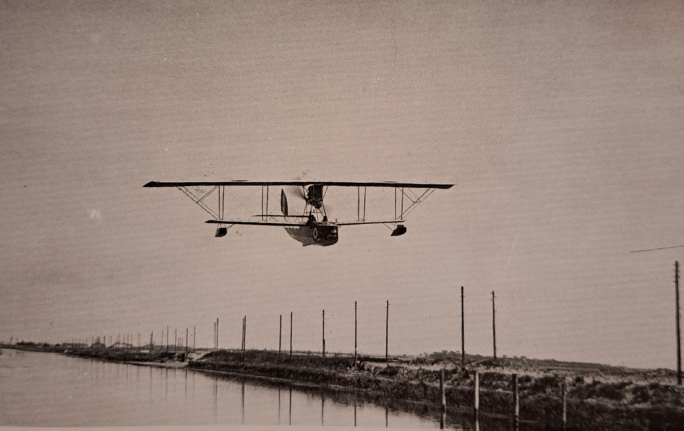
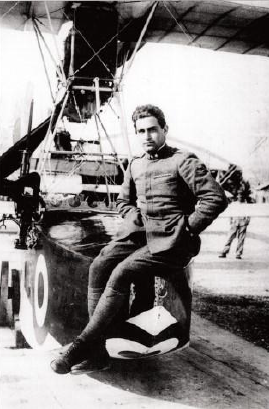
From November 1916 to August 1917, the squadron was commanded by Federico Martinengo, who coordinated bombing raids and reconnaissance missions against Austro-Hungarian targets while protecting British naval monitors operating near Trieste. Martinengo ended the Great War as a flying ace with five officially recognised victories, receiving two Silver Medals for Military Valour and a War Cross. He had the image of a dragon painted on the fuselage of his seaplane, a symbol that today forms the emblem of the Italian Navy frigate named in his honour.
Luigi Rizzo also served on the island as commander of the MAS flotilla. Renowned for sinking the Austro-Hungarian battleships Wien and Szent István and for the famous Buccari Raid, he met and married Giuseppina Marinaz from Grado during his time on Isola Gorgo.
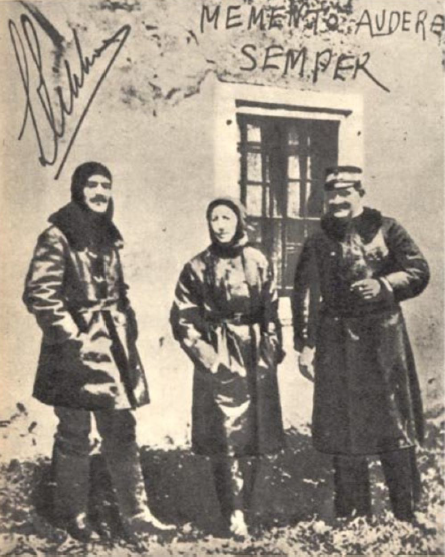
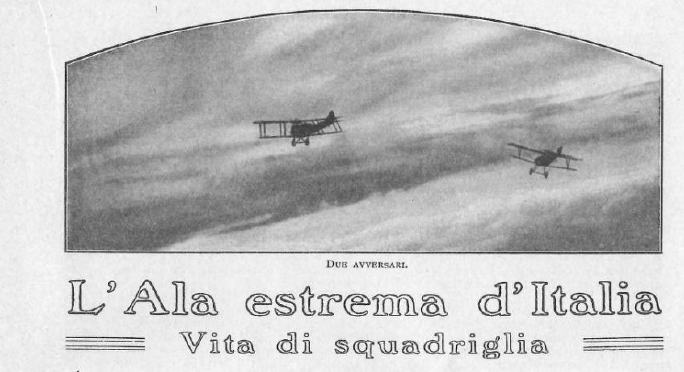
Otello Cavara, journalist and seaplane pilot stationed on Isola Gorgo, wrote an article published in issue no. 11 of La Lettura, the monthly magazine of Corriere della Sera, on 1 November 1917. In it he recounted how Gabriele D’Annunzio frequently visited the Gorgo base and referred to the seaplane squadrons stationed in the Grado lagoon as “L’Ala estrema d’Italia”.
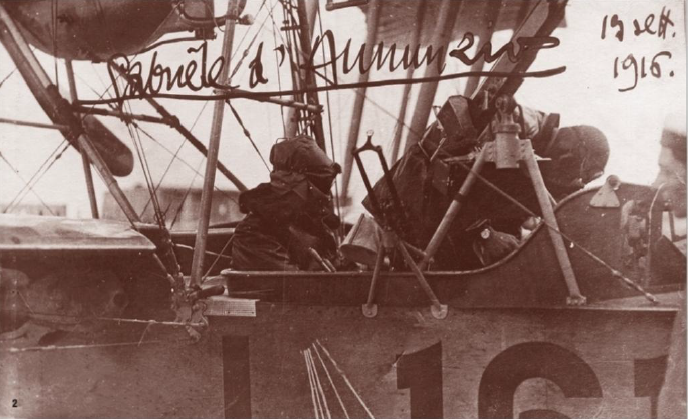
D’Annunzio flew as an observer alongside pilot Luigi Bologna. On 16 January 1916, their Macchi L.1 suffered engine failure during a landing at Grado. In the impact, D’Annunzio sustained a serious head injury that caused blindness in his right eye due to retinal detachment. During his recovery he wrote the novel Notturno.
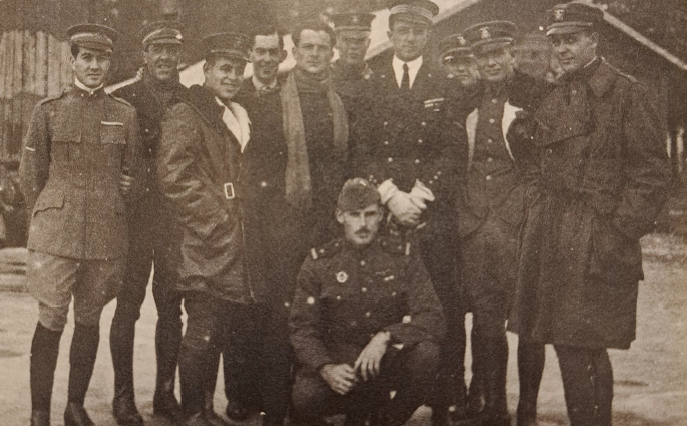
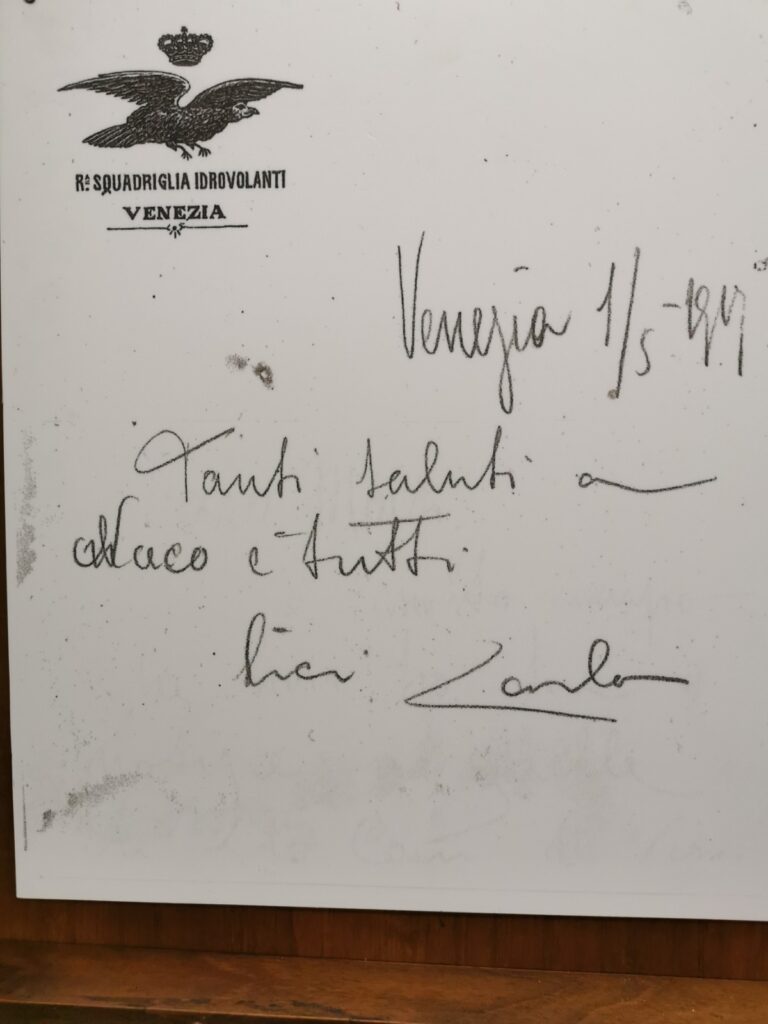
Isola Gorgo thus became an extraordinary crossroads of destinies, where the lives of great poets, flying aces, legendary commanders and journalists converged. Yet it was on this small stretch of lagoon that a friendship was forged which would leave a lasting mark on the history of Italian industry: that between Giovanni Ravelli, Giorgio Parodi and Carlo Guzzi.
Their unbreakable friendship began on Isola Gorgo at the seaplane base, where Ravelli and Parodi served as pilots while Guzzi worked as an engine mechanic sergeant. The latter two would soon become the founders of the legendary Moto Guzzi motorcycle company. Born in Milan in 1889, Carlo Guzzi had gained experience in the Isotta Fraschini aircraft engine testing department before enlisting and being transferred to Grado in 1917 as an Engine Mechanic Sergeant.
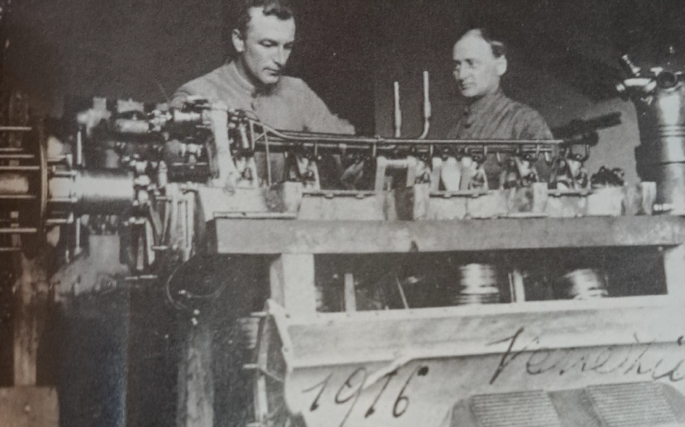
Together with Giorgio Parodi, first a Royal Navy volunteer and later a seaplane observer, and Giovanni Ravelli, motorcycle racer and pilot, he planned to build a completely new motorcycle after the war—one superior to every other machine of its time. Guzzi would be responsible for engineering, Parodi for financing, while Ravelli was to become its rider. Tragically, Ravelli died in August 1919 following an aircraft accident while flying his biplane. To honour his memory, his friends chose the eagle with outstretched wings as the emblem of the new marque.
The first prototype, the 1919 G.P., featured a horizontal single-cylinder engine with four overhead valves.
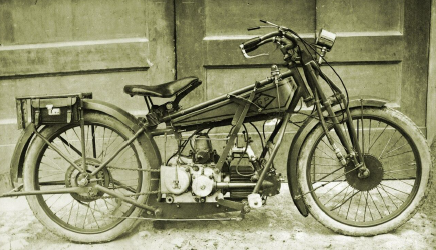
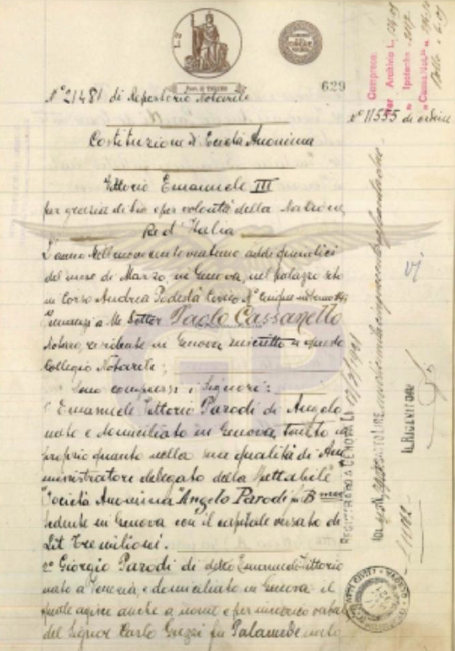
Giorgio Parodi and Carlo Guzzi subsequently opted for a simpler design and put the Normale into production, powered by an 8 hp two-valve engine capable of 80 km/h. On 15 March 1921, Società Anonima Moto Guzzi was officially founded with capital provided by Emanuele Vittorio Parodi, Giorgio’s father. The company’s registered office remained in Genoa, while manufacturing operations were established in Mandello del Lario.
That same year, the new motorcycle competed in the North–South Raid with Mario Cavedini and Aldo Finzi, before Gino Finzi secured a class victory at the Targa Florio. These early successes firmly established both the company’s commercial reputation and its sporting prestige.
Bibliography
- Caliaro, Luigino, Ali dall’Adige al Brenta. Campi di volo e aviazione militare della Grande Guerra tra le province di Verona, Vicenza e Padova, Rivoli Veronese, IBN Editore, 2013.
- Cimbolli Spagnesi, Piero, Basi navali e aeree della Regia Marina nella Prima Guerra Mondiale 1914–1918, Rome, Ufficio Storico della Marina Militare, 2020.
- Cimbolli Spagnesi, Piero, La Regia Marina italiana e la ricognizione aerea nella Prima guerra mondiale. Storiografia e ordinamenti, in P. Cimbolli Spagnesi (ed.), La Regia Marina nella Grande Guerra, Rome, Ufficio Storico della Marina Militare, 2022.
- Cosentino, Michele, L’aviazione della Regia Marina durante la 1ª Guerra Mondiale, Rome, Ufficio Storico della Marina Militare, 2011.
- Gentili, Roberto & Varriale, Paolo, I Reparti dell’aviazione italiana nella Grande Guerra, Rome, Ufficio Storico dell’Aeronautica Militare, 1999.
- Imperiale di Sant’Angelo, Cesare, L’Unione nazionale della marina di diporto e i volontari del mare, Genoa, Typ. R. Istituto Sordomuti, 1922.
- Parodi, Giorgio (Associazione Giorgio Parodi), Giorgio Parodi: le ali dell’aquila, Genoa, Tormena Editore, 2021.
- Porro, Felice, La guerra nell’aria 1915–1918, Milan, Matex, 1935 (later republished by IBN Editore).
- Rebaudo, Ludovico, Anfore romane fra gli idrovolanti. Archeologia di guerra sull’isola di Gorgo (luglio/agosto 1917), La Rivista di Engramma, no. 132, January 2016.
- Sorè, Pietro, L’aviazione nel Nord-Est. Storia dei cento campi di volo del Friuli Venezia Giulia 1910–2010, Udine, Aviani & Aviani Editori, 2012.
- Storni, Giorgio, Egidio Greco e la stazione idrovolanti di Grado, Gorizia, Associazione Culturale “Grado Nostra”, 2015.
- Touring Club Italiano / Regia Aeronautica (Various Authors), Il fronte del cielo. Guida all’Aviazione nel Veneto durante la Grande Guerra 1915–1918, Venice, Direzione Turismo della Regione Veneto, 2008.