Historic motoring between Trieste, Gorizia, Grado and the Mitteleuropean region
Within north-eastern Italy, Trieste holds a unique place in the history of European motoring. Thanks to its position at the crossroads of the Italian world, Central Europe and the Balkans, the city was among the first in the region to embrace the automobile and the motorcycle as symbols of innovation, progress and sporting passion. As early as the beginning of the twentieth century, when Trieste was still part of the Austro-Hungarian Empire, the city’s first motoring clubs were established and competitions were organised that attracted tourists from across the Empire.
Any account of Trieste’s motoring history must inevitably include the Trieste–Opicina race, one of the oldest and most prestigious hill-climb races in Europe. The inaugural event took place on 4 June 1911, when Trieste was still part of the Austro-Hungarian Empire and served as the principal port of the Adriatic. It was the city’s vibrant entrepreneurial spirit and cosmopolitan atmosphere during the Belle Époque that fostered the creation of the competition, conceived as a celebration of modernity and technological progress.
The approximately ten-kilometre course linked the centre of Trieste with the Karst Plateau, climbing the spectacular Strada Nuova per Opicina through a sequence of fast straights and demanding bends. One intriguing detail perfectly illustrates the historical context of the time: in 1911, competitors from the Kingdom of Italy were officially regarded as “foreign” entrants, since Trieste still belonged to the Habsburg Empire.
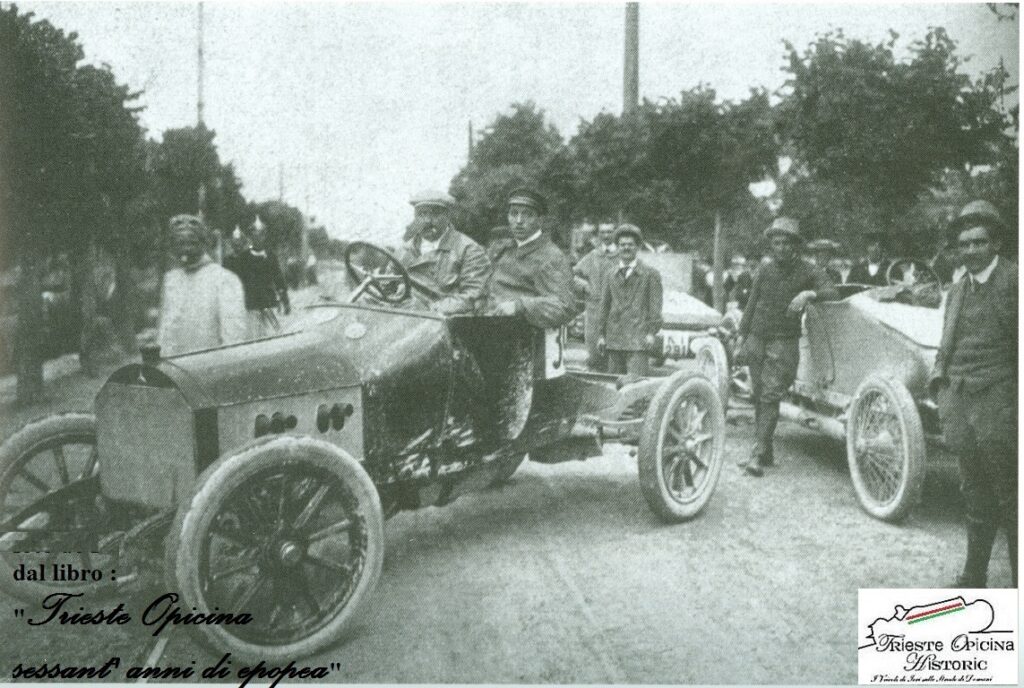
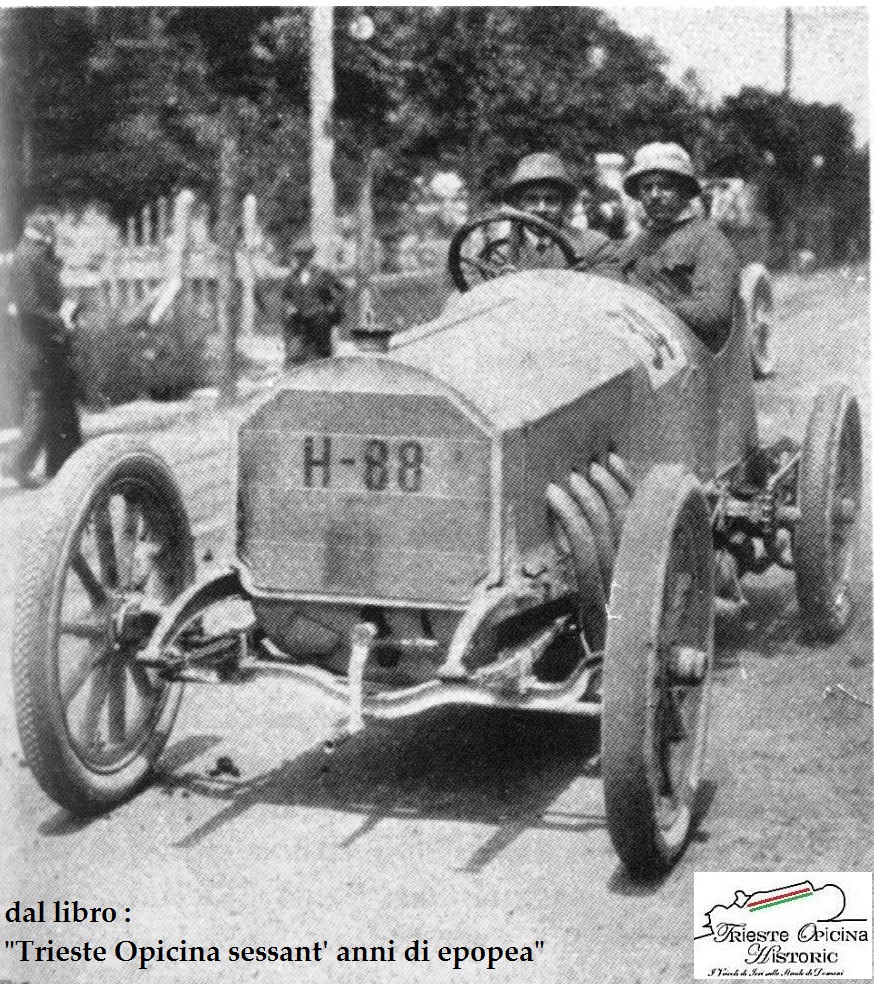
From the 1931 edition onwards, the automobile race was preceded by a motorcycle competition organised jointly by the Automobile Club Trieste and the Moto Club Trieste. This event incorporated the earlier “Trieste–Poggioreale” race, first held in 1920, which featured a variety of classes including motorcycles of different engine capacities, sidecars, lightweight motorcycles and even motor-assisted bicycles. In 1926, the event was won by Ugo Prini riding a Moto Guzzi.
Often referred to as “la Monza in salita”, the course witnessed some of the greatest names in international motor racing competing against each other, including Achille Varzi, Tazio Nuvolari, Clemente Biondetti and Ludovico Scarfiotti.
The race came to an end in 1971, not because of declining interest, but because advances in vehicle performance had made the cars too fast for a course increasingly surrounded by urban development. In addition, the closure of the Strada Nuova per Opicina, the main road linking Trieste with the Karst Plateau, created growing logistical and safety concerns. The decision to discontinue the event permanently was also influenced by the serious accident involving Austrian driver Herbert Jerich during the final edition.
This remarkable legacy is preserved by the Club dei Venti all’Ora, founded in Trieste in 1961 by a group of enthusiasts determined to safeguard the history of classic motoring. The Club was among the pioneers of Italy’s historic vehicles movement and is one of the founding members of the Automotoclub Storico Italiano (ASI). Its activities extend well beyond organising rallies, encompassing historical research, the conservation and restoration of historic vehicles, cultural outreach, and the promotion of the motoring heritage of the Alpe Adria region.
Andrea Sandrin Club dei Venti all’Ora